
What Is a Collapsible Jerry Can Used for in Humanitarian Aid?
Water looks simple until a family loses safe access to it. I have seen that one missing container can make daily life much harder.
A collapsible jerry can is used for collecting, carrying, and storing water in humanitarian aid projects.1 I see it as a basic relief item for families who need water for drinking, cooking, washing, and hygiene after disasters, displacement, or emergency relocation.2
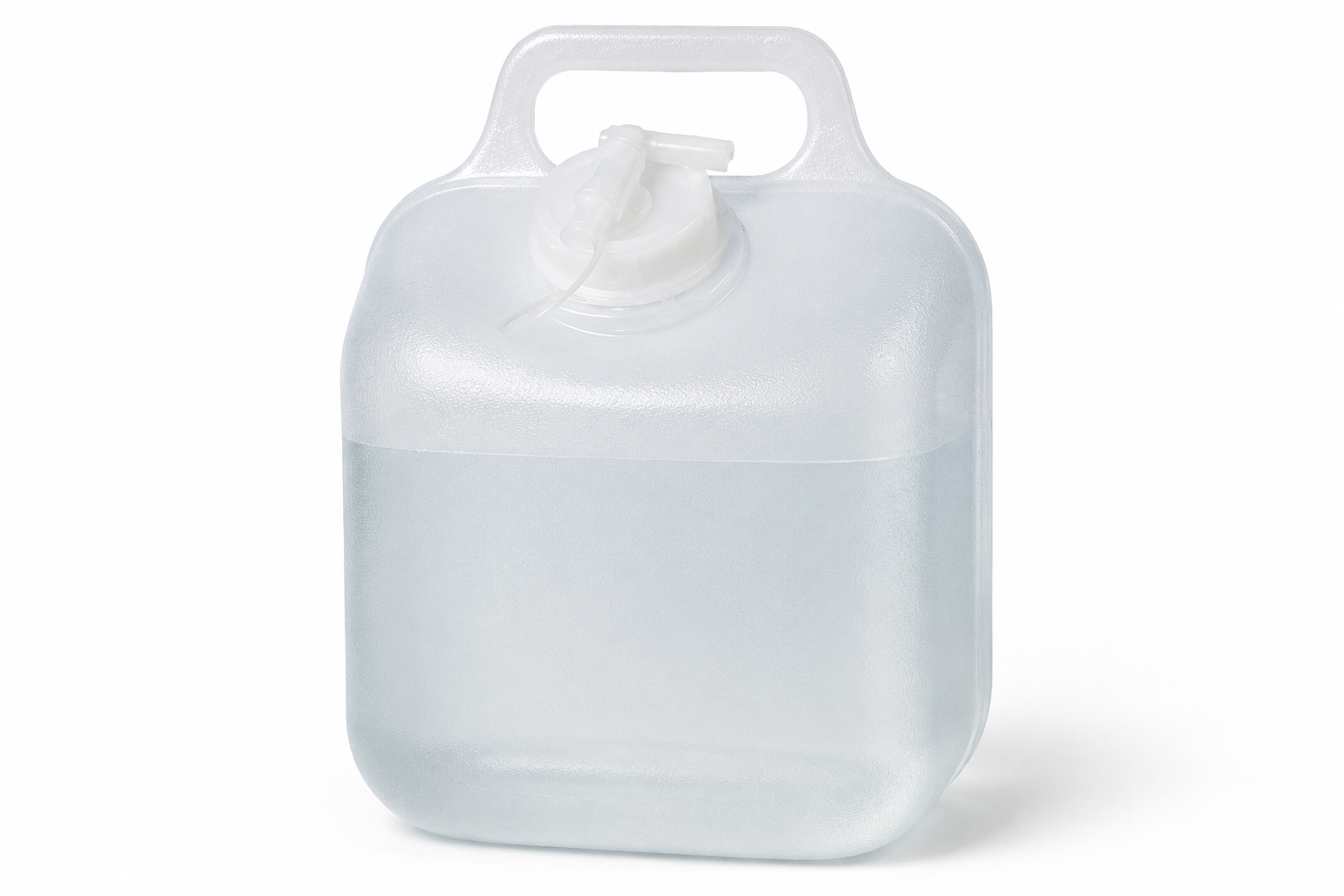
I often explain this product in a very simple way. It is not only a plastic container. It is a daily tool for a family that may not have a tap, a kitchen, or stable housing. When I look at humanitarian supplies, I always ask one question first: can real people use this item every day without trouble? A collapsible jerry can answers that question well, so I want to break down where it is used and why it matters.
Why Do Families Need a Collapsible Jerry Can After a Disaster?
When water points are far away, every trip becomes a burden. I know that a weak or leaking container can turn safe water access into another daily problem.
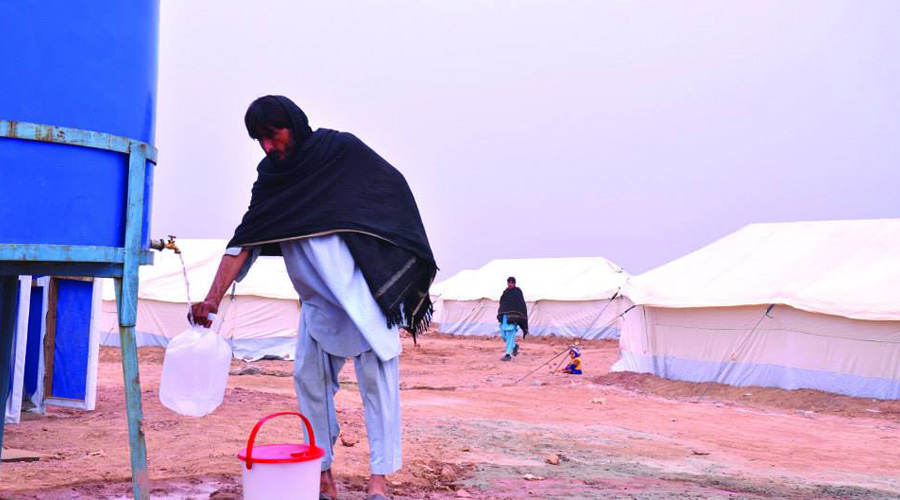
A family needs a collapsible jerry can to collect water from distribution points and store it at home. I see it used for drinking water, cooking water, handwashing, cleaning, and basic hygiene in shelters, camps, and temporary housing.
How I understand the daily use
In many relief settings, water is not delivered into each home. People go to a water point, fill a container, and carry it back.3 I see the jerry can as a bridge between the water source and the family. The container must be light enough to carry. It must be stable enough to stand in a shelter. It must also keep the water clean during storage.
| Daily need | How the jerry can helps |
|---|---|
| Drinking | It stores water in a closed container |
| Cooking | It keeps water ready near the family area |
| Washing | It supports basic handwashing and cleaning |
| Carrying | It helps users move water from water points |
| Temporary living | It works in tents, shelters, and camps |
I also pay attention to who carries the water. In many places, women and children may carry containers often.4 A lightweight product matters here. A connected cap also matters, because a lost cap can turn a useful container into an unsafe one.5 Small design choices can make daily life easier.
Why Is the Collapsible Design Important for Aid Organizations?
Relief cargo space is always limited. I have learned that even a good product can be hard to use if it takes too much space before delivery.
The collapsible design reduces storage and transport volume.6 When empty, the jerry can folds flat, so aid organizations can ship, store, and pre-position more units in less space before an emergency response.7


How I think about logistics
In humanitarian aid, the product is only one part of the answer. The supply chain is just as important. I often think about the full path of the item. It starts in a factory. It moves to a warehouse. It may sit in pre-positioned stock. It then moves by truck, container, air cargo, or local transport. At the end, a family receives it.
A rigid container takes up the same space whether it is full or empty. A collapsible jerry can is different. It can be folded before use. This helps buyers fit more pieces into cartons, pallets, containers, and warehouses.
| Logistics issue | Collapsible jerry can benefit |
|---|---|
| High freight cost | More units can fit in one shipment |
| Limited warehouse space | Folded units need less room |
| Fast emergency response | More stock can be prepared in advance |
| Bulk procurement | Packing can be more efficient |
| Field distribution | Staff can handle more items at once |
For me, this is one reason the product is so practical. Humanitarian teams do not only need strong products. They also need products that can move fast and store well.
What Features Make a Jerry Can Suitable for Field Use?
A container may look fine in a sample room, but the field is different. I always worry about leakage, rough handling, and repeated daily use.
A field-ready collapsible jerry can should be lightweight, leak-resistant, durable, and easy to use.8 I look for a secure cap, strong seams, safe materials, practical handles, and a design that supports real daily water collection.
What I check in a practical product
I never see a relief water container as a decorative item. It must survive real use. People may drag it, drop it, squeeze it into shelters, place it under the sun, or carry it over uneven ground. The container must handle this kind of life.
The cap is one simple example. If the cap is loose and easy to lose, the water may become unsafe. That is why I like a cap connected to the body with a string. The handle is another important part. It should feel comfortable when full. A 10L or 20L container can become heavy very quickly.
| Feature | Why I care about it |
|---|---|
| Food-contact material9 | It supports safer drinking water storage |
| Leak resistance | It protects water and reduces waste |
| Strong handle | It helps users carry water more safely |
| Connected cap | It reduces the risk of cap loss |
| Foldable body | It saves space before use |
| Clear capacity | It helps distribution and household planning |
I also think testing is important. Drop tests, leakage tests, material safety tests, and packing tests can help reduce problems before shipment.10 In aid projects, a failed product is not only a quality issue. It may affect a family’s daily water access.
Are Collapsible Jerry Cans Used by UN and NGO Projects?
Many buyers ask if this item is really used in humanitarian work. I understand the question, because project teams need proven and practical relief supplies.
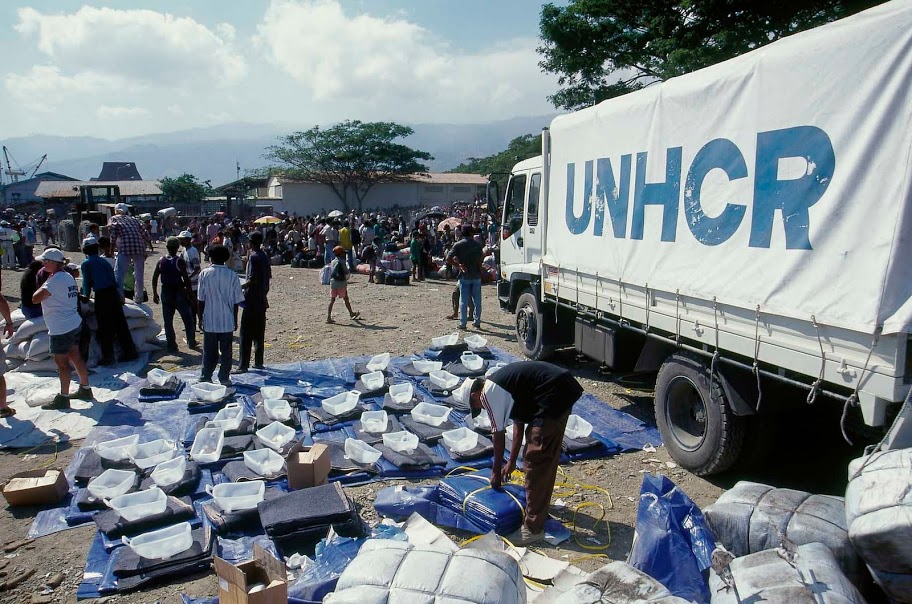
Yes, jerry cans and water containers are widely used as core relief items by humanitarian organizations.11 I have seen references from UNHCR and other UN or NGO agencies for water-container procurement and emergency household support.
How I place this product in the aid market
I try to be careful with claims. I do not say that every collapsible jerry can was invented by one organization. Product history can be more complex. But I can say that water containers are a standard part of many relief programs.
UNHCR lists semi-collapsible 10L jerry cans as a procured water-container item.12 UNHCR also says it procures about 400,000 jerry cans annually. This shows how important this type of product is in refugee and emergency settings.
The Oxfam Jerry Bucket is another useful example. It was designed by Oxfam’s WASH team and developed with NRS Relief. I see it as a good case of product design focused on safe water transport and storage.
| Organization type | Common use |
|---|---|
| UN agencies | Refugee support and emergency response |
| NGOs | WASH programs and household kits |
| Red Cross systems | Disaster relief and basic needs support |
| Government stockpiles | Disaster preparedness |
| Local partners | Camp and community distribution |
For manufacturers like us, this means the product must match real project needs. It must be safe, practical, packable, and consistent in quality.
Conclusion
I see the collapsible jerry can as a small item with a large role. It helps families collect, carry, and store safe water when life is unstable.
"Jerrycan, plastic, foldable - Standard products catalogue IFRC ICRC", https://itemscatalogue.redcross.int/green--4/household--8/household-equipment-kits-and-sets--53/jerrycan-plastic-foldable--HCONJCAN02.aspx. A humanitarian relief-item catalogue identifies semi-collapsible jerry cans as water containers procured for emergency use, supporting the description of the item as a tool for household water collection, transport, and storage. Evidence role: definition; source type: institution. Supports: A humanitarian organization catalogue or specification should identify collapsible or semi-collapsible jerry cans as water containers used for collecting, transporting, and storing water in relief operations.. ↩
"Water, sanitation and hygiene (WASH)", https://www.who.int/health-topics/water-sanitation-and-hygiene-wash. Emergency WASH standards describe household water supply as necessary for drinking, food preparation, and personal and domestic hygiene, supporting the article’s list of post-disaster family water needs. Evidence role: expert_consensus; source type: institution. Supports: Emergency WASH standards should state that water supply in crises must cover drinking, food preparation, personal hygiene, and domestic uses.. ↩
"How to Create an Emergency Water Supply - CDC", https://www.cdc.gov/water-emergency/about/how-to-create-and-store-an-emergency-water-supply.html. Humanitarian WASH guidance discusses the provision of communal water points in emergency settlements and the need for households to collect and store water, providing contextual support for the article’s description of water collection practices. Evidence role: general_support; source type: institution. Supports: A WASH manual or emergency standard should describe communal water points and household collection as part of emergency water-supply systems.. Scope note: This would support the practice as common in emergency settings, not prove that it occurs in every relief response. ↩
"Women and girls bear brunt of water and sanitation crisis", https://www.who.int/news/item/06-07-2023-women-and-girls-bear-brunt-of-water-and-sanitation-crisis---new-unicef-who-report. WHO/UNICEF monitoring reports identify women and children as frequent collectors of household water in settings without on-premises water access, supporting the article’s statement about who may carry containers. Evidence role: statistic; source type: institution. Supports: A WHO/UNICEF or similar report should document that women and children are frequently responsible for household water collection where water is off premises.. Scope note: The evidence is population-level and may vary by country, community, and emergency context. ↩
"Safe Water Storage | Global Water, Sanitation, and Hygiene (WASH)", https://www.cdc.gov/global-water-sanitation-hygiene/about/about-safe-water-storage.html. Safe-water guidance recommends storing treated or collected water in clean, covered containers to limit recontamination, supporting the article’s point that loss of a cap can compromise water safety. Evidence role: mechanism; source type: institution. Supports: A health or WASH source should explain that safe household water storage requires covered containers to reduce contamination after collection.. Scope note: The source would support the importance of covered storage generally, not necessarily evaluate connected-cap designs specifically. ↩
"[PDF] IOM Logistics Emergency Catalogue", https://www.iom.int/sites/g/files/tmzbdl486/files/procurement/IOM%20Logistics%20Emergency%20catalogue%20Dec%202016.pdf. Humanitarian product specifications for semi-collapsible jerry cans list compact packed dimensions, supporting the claim that the design reduces storage and transport volume when the containers are empty. Evidence role: general_support; source type: institution. Supports: A relief-item specification should provide packed or folded dimensions for collapsible jerry cans, supporting the claim that they reduce empty storage and transport volume.. Scope note: The evidence would demonstrate compact packing for specified models rather than quantify savings for all collapsible jerry cans. ↩
"Emergency Supply Pre-positioning Strategy - ReliefWeb", https://reliefweb.int/organization/esups. Humanitarian logistics research treats transport capacity and warehouse space as constraints in relief-item pre-positioning, providing contextual support for the claim that lower packed volume can allow more units to be stored or moved before response. Evidence role: mechanism; source type: paper. Supports: A humanitarian logistics paper should explain that storage volume and transport capacity constrain relief pre-positioning and distribution.. Scope note: This would support the logistics mechanism generally and should be paired with product-specific packing data for direct proof. ↩
"[PDF] IOM Logistics Emergency Catalogue", https://www.iom.int/sites/g/files/tmzbdl486/files/procurement/IOM%20Logistics%20Emergency%20catalogue%20Dec%202016.pdf. Humanitarian procurement specifications for jerry cans commonly include requirements for leak resistance, robust construction, handles, and defined capacity, supporting the article’s criteria for field-ready containers. Evidence role: expert_consensus; source type: institution. Supports: A humanitarian procurement specification should state performance requirements such as leak resistance, durable construction, usable handles, and manageable weight.. Scope note: The exact listed features may differ among agencies and product specifications. ↩
"Food Contact Materials - Food Safety - European Commission", https://food.ec.europa.eu/food-safety/chemical-safety/food-contact-materials_en. Food-contact material regulations require substances used with food or drink to meet safety requirements for intended use, supporting the article’s emphasis on suitable materials for drinking-water containers. Evidence role: definition; source type: government. Supports: A food-contact materials regulation or potable-water storage guideline should define why materials in contact with consumable water must meet safety requirements.. Scope note: Food-contact compliance supports material safety for contact use but does not by itself prove microbiological safety of stored water. ↩
"IOM Logistics Emergency Catalogue", https://www.iom.int/sites/g/files/tmzbdl486/files/procurement/IOM%20Logistics%20Emergency%20catalogue%20Dec%202016.pdf. Relief-item specifications for water containers include performance and quality checks such as leakage resistance, strength, material requirements, and packaging criteria, supporting the article’s statement that testing helps reduce shipment and field-use problems. Evidence role: expert_consensus; source type: institution. Supports: A humanitarian item specification or quality standard should describe testing for leakage, drop resistance, material safety, or packaging before shipment.. Scope note: The source would show that such tests are used or specified; it may not quantify the reduction in field failures. ↩
"Technical Specifications and Requirements for Jerry Can - ReliefWeb", https://reliefweb.int/report/lebanon/technical-specifications-and-requirements-jerry-can. Core-relief-item guidance from humanitarian organizations includes jerry cans or household water containers among standard emergency supplies, supporting the article’s characterization of these items as widely used in relief programming. Evidence role: general_support; source type: institution. Supports: A UNHCR, IFRC, or similar core-relief-item list should include jerry cans or water containers among standard emergency household items.. Scope note: The evidence would show inclusion in major agency lists, not universal use by every humanitarian organization. ↩
"[PDF] JERRYCAN, SEMI-COLLAPSIBLE, 10L, RECYCLED (water container)", https://www.unhcr.org/sites/default/files/2023-06/jerrycan-recycled.pdf. UNHCR procurement documentation lists a semi-collapsible 10-litre jerry can as a water-container item, directly supporting the article’s reference to UNHCR use of this product type. Evidence role: case_reference; source type: institution. Supports: A UNHCR catalogue or procurement page should list a semi-collapsible 10L jerry can as a water-container item.. ↩